Rainwater Collection for the Garden
One inch of rain on 1,000 square feet of roof is roughly 623 gallons before losses.
What matters
One inch of rain on 1,000 square feet of roof is roughly 623 gallons before losses.
Who this suits
Overflow routing is essential because a full barrel still receives runoff.
The Self-Sufficient Backyard
Check the current vendor page for the latest contents, price, shipping and refund terms.
Check current offer →Affiliate link. Reliant Ground may earn a commission.What to watch
Use screens and covered containers to reduce debris and insects.
Practical takeaway
Gravity-fed watering can work, but elevated tanks need stable support.
Bottom line
Roof-collected rainwater is not automatically safe to drink.
Estimate the collection potential
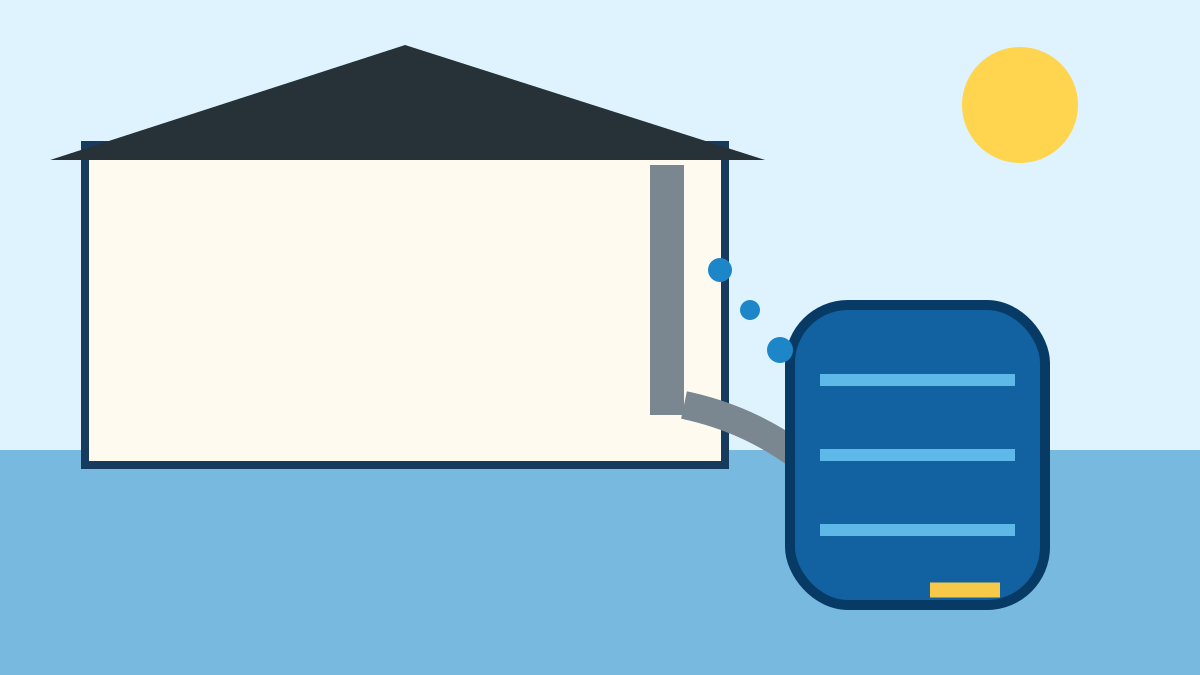
A useful rule of thumb is that one inch of rain falling on 1,000 square feet of roof represents about 623 gallons before losses. Real collection is lower because of splash, first-flush diversion, leaks and incomplete capture, but the number explains why a small barrel can fill surprisingly quickly.
Design the overflow before the inlet
A rain barrel that is full becomes part of the drainage system. Overflow should move water away from foundations and places where it will erode soil or create a nuisance. This is one of the most commonly overlooked parts of a simple installation.
Keep debris and insects out
Screen inlets, cover stored water and maintain gutters. A garden-water system should not become a mosquito nursery or a container full of roof debris.
Gravity pressure is modest
Raising a barrel can improve pressure, but water is heavy. A full 55-gallon barrel weighs well over 400 pounds before the container and support are counted. Any stand must be stable and suitable for that load.
Garden water is not automatically drinking water
Roof material, bird droppings, dust and other contaminants can enter collected rainwater. Treat a garden system as non-potable unless it has been designed, treated and approved for potable use under the rules that apply where you live.